What Is Reducing?
Reducing is known as the practice of generating less waste. It is the first of the three Rs of waste management: reduce, reuse, and recycle (Rogue Disposal and Recycling Inc., 2018). According to Rogue Disposal and Recycling Inc., Reducing waste is the “best method” for ensuring a clean environment. Reducing waste stops the problem early on, by creating less waste to begin with.
Reducing waste comes in many forms. It means reducing food waste by making a meal plan before buying food (Capital Regional District, 2025). It also means reducing plastic waste by purchasing items that last longer, or items that can be used multiple times (reusable water flasks as opposed to plastic water bottles).
How Does Reducing Work?
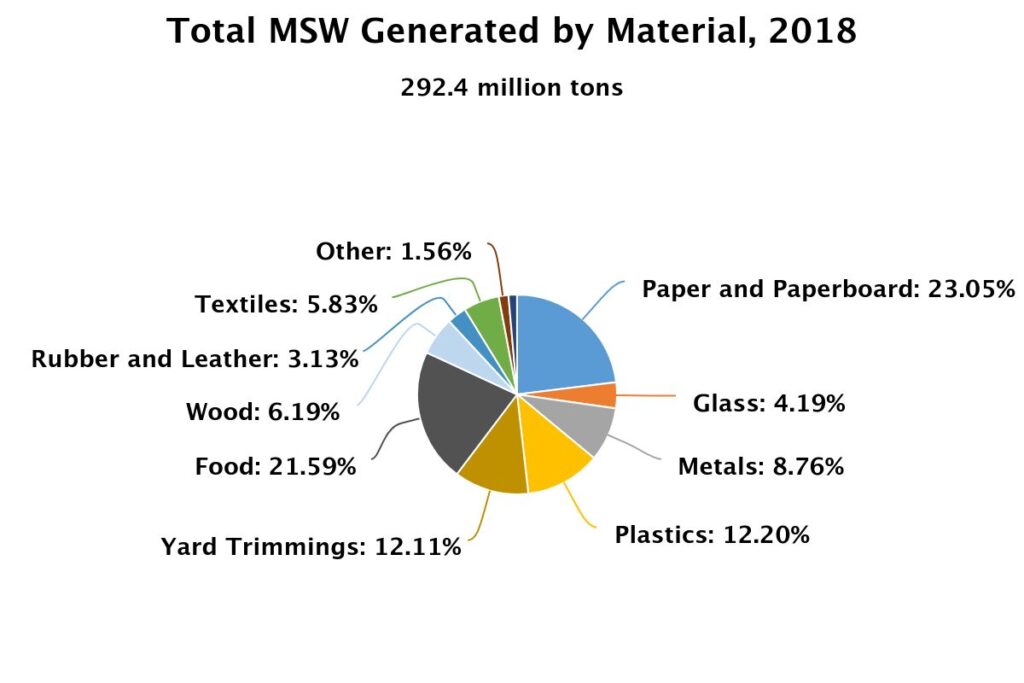
Reducing waste works by altering your habits and picking up new habits that produce less waste. Rogue Disposal and Recycling Inc. suggests some easily implementable ways for individuals to reduce waste (2018). The first one is to pack your lunch in a lunch box to reduce paper and plastic waste, which amount to roughly 35% of all Municipal Solid Waste (MSW), totalling over one third of all waste generated (U.S. Environmental Protection Agency, 2025). For reference, MSW refers to common household waste, as well as commercial or institutional waste. Below is a diagram that illustrates the “Total MSW Generated by Material,” in 2018:
Why Is Reducing Important?
Reducing waste is important because it makes the environment cleaner and reduces energy and resource consumption. According to the nature restoration organization Green Earth, proper waste management practices reduce air, water, and soil pollution (Green Earth, 2025). This occurs because when less waste is produced and sent to landfills and incineration facilities, less harmful substances are released into the atmosphere and environment. On the other hand, reducing the amount of waste generated reduces the energy and resources required to process it (Green Earth, 2025). This is good because it allows resources and energy to be allocated to process generated waste more efficiently.
POP QUIZ!
True or False: “All About Reducing!“
References
A greener future through waste management. (2025). Green Earth. https://www.green.earth/waste-management
Capital Regional District. (2025). Reducing Waste. https://www.crd.ca/environment/reducing-waste
Exploring the three Rs of waste management — Reduce, Reuse, Recycle. (2018). Rogue Disposal and Recycling Inc. https://roguedisposal.com/resources/education/recycling/exploring-the-three-rs-of-waste-management-reduce-reuse-recycle
National Overview: Facts and Figures on Materials, Wastes and Recycling. (2025). U.S. Environmental Protection Agency. https://www.epa.gov/facts-and-figures-about-materials-waste-and-recycling/national-overview-facts-and-figures-materials